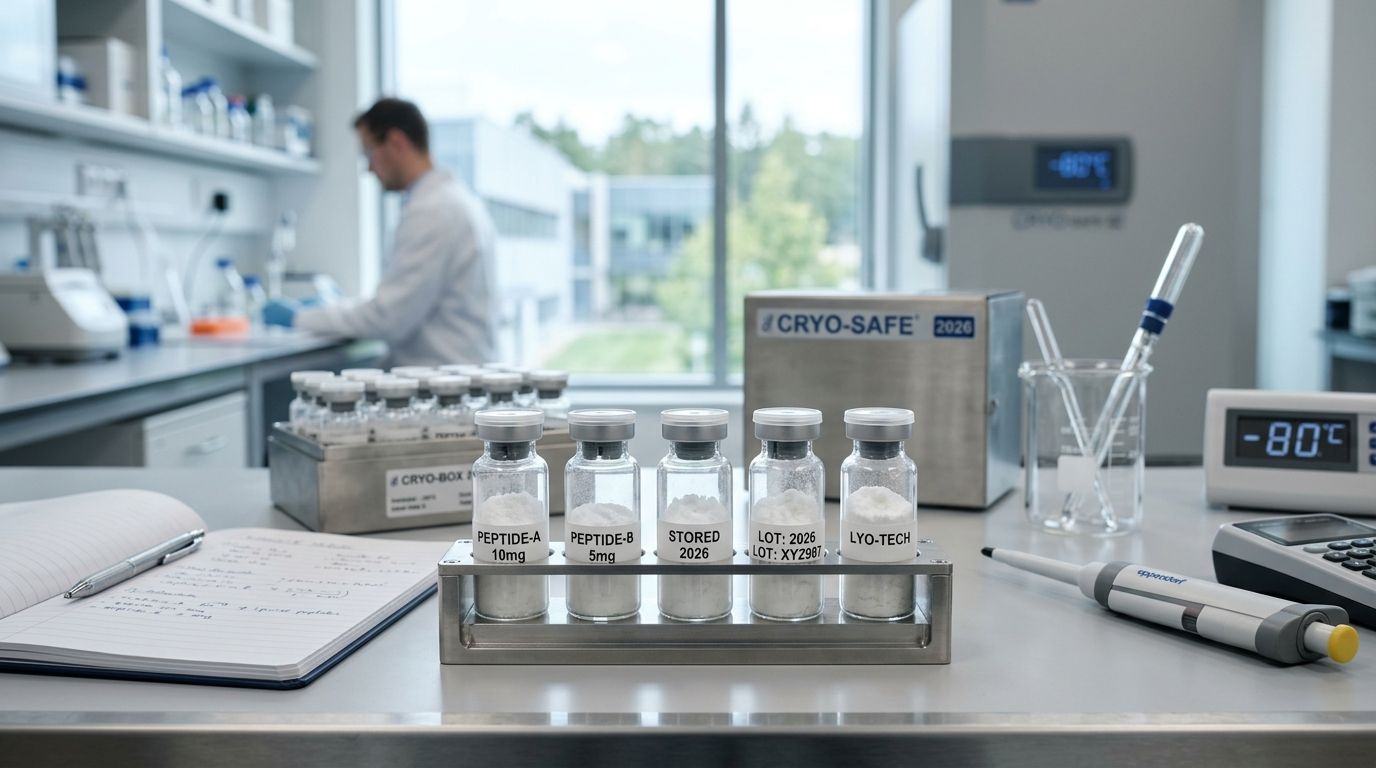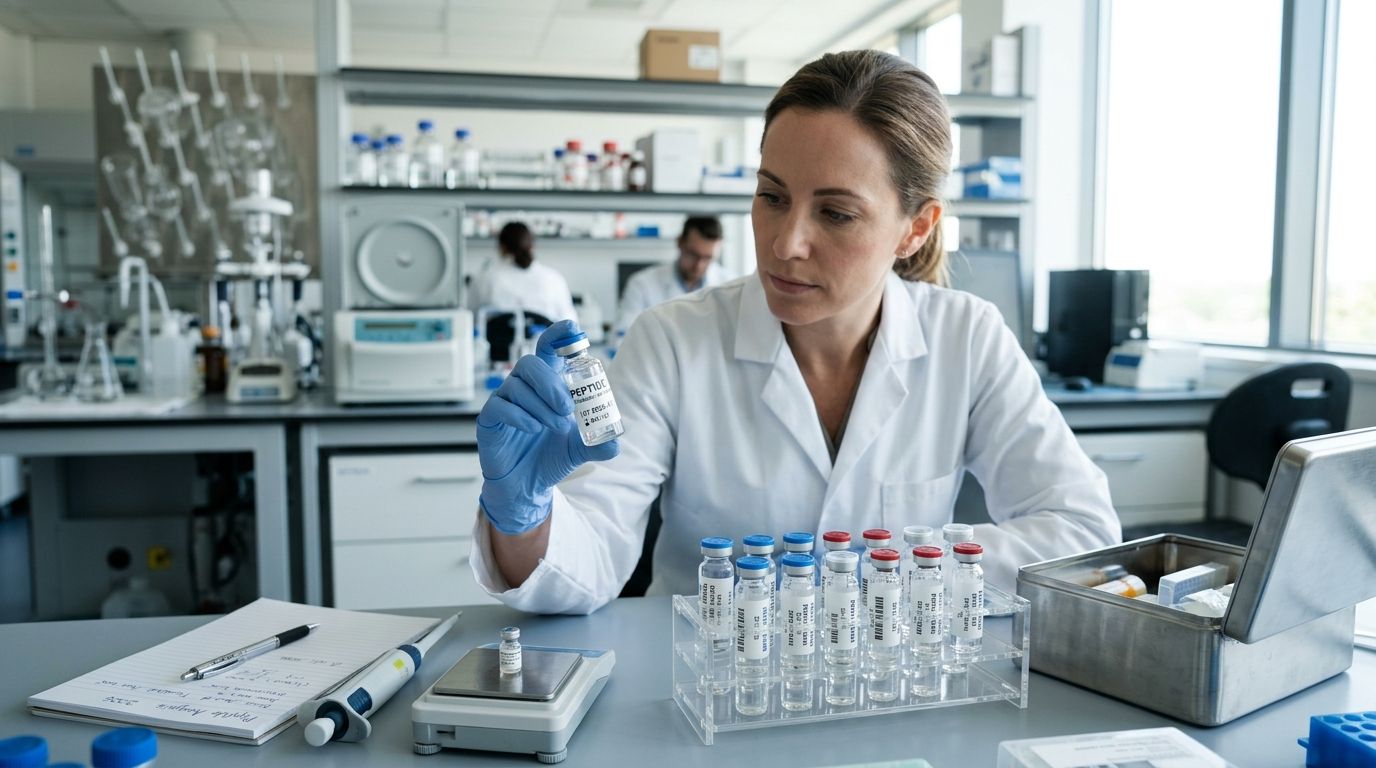
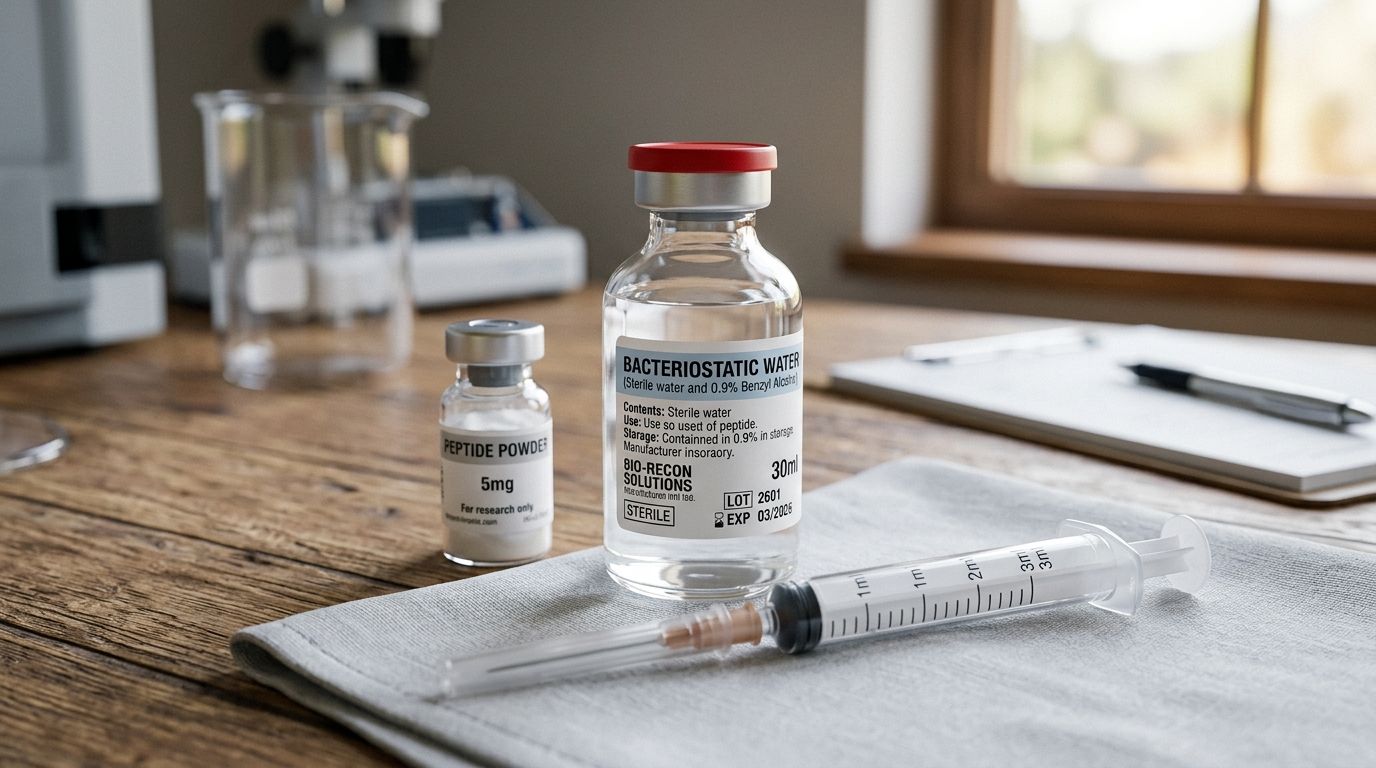
Choosing the right diluent matters as much as the peptide itself: best overall is USP-grade bacteriostatic water with 0.9% benzyl alcohol for routine multi-dose reconstitution, best for immediate single-use prep is sterile water for injection (non-bacteriostatic), and best for high-volume labs is bulk research-grade bacteriostatic water. All five options below are compared on grade, preservative content, and documentation — not price or availability, since both change constantly.
- USP-grade bacteriostatic water (0.9% benzyl alcohol) is the best bacteriostatic water for peptides in most multi-dose reconstitution protocols in 2026.
- Sterile water for injection has no preservative, so it's the right call for single-use, same-day reconstitution only.
- Benzyl-alcohol-free bacteriostatic water exists for protocols where that preservative interferes with the compound.
- A certificate of analysis and documented benzyl alcohol concentration matter more than brand name when sourcing.
- Multi-dose vials are commonly treated as good for roughly 28 days refrigerated after first puncture, per general USP/CDC multi-dose vial guidance.
Why this matters
Reconstitution diluent choice affects peptide stability, sterility across repeated draws, and whether a compound tolerates the preservative at all. Benzyl alcohol denatures some peptides and interferes with certain analytical methods, which is why researchers ask for the best bacteriostatic water for peptides rather than grabbing whatever vial is on the shelf. Celonyx Labs supplies research peptides at 99% purity with third-party testing, and reconstitution technique is the variable researchers control after the compound arrives. Get the diluent grade wrong and even a well-characterized peptide gives inconsistent results in 2026 as it did in prior years.
Every item below is labeled strictly for laboratory and research use. None of this is medical guidance, and none of these compounds are for human or animal use.
What makes the best bacteriostatic water for reconstitution
- USP monograph compliance with a stated 0.9% benzyl alcohol concentration, not an unlabeled percentage
- Third-party sterility and endotoxin testing backed by a certificate of analysis (COA)
- Preservative-alternative or preservative-free options for benzyl-alcohol-sensitive protocols
- A documented multi-dose stability window after first puncture, stated by the supplier or compounding pharmacy
- Vial size matched to typical reconstitution ratios so researchers aren't wasting volume or overdiluting
- Batch-level documentation (lot numbers, COAs) that supports lab record-keeping and reproducibility
At a glance: bacteriostatic water types compared
| Type | Best for | Standout feature | Key limitation |
|---|---|---|---|
| USP-grade bacteriostatic water (0.9% benzyl alcohol) | General multi-dose reconstitution | Preservative supports repeated vial access | Unsuitable for benzyl-alcohol-sensitive compounds |
| Sterile water for injection (non-bacteriostatic) | Single-use, immediate reconstitution | No preservative to interact with sensitive peptides | Must be used same day, no multi-dose storage |
| Pharmacy-compounded bacteriostatic water | Custom fill volumes | Compounded to lab-specified concentrations | Compounding adds lead time |
| Benzyl-alcohol-free bacteriostatic water | Benzyl-alcohol-sensitive protocols | Alternative preservative avoids benzyl alcohol | Narrower supplier pool, less commonly stocked |
| Bulk research-grade bacteriostatic water | High-volume, multi-project labs | Larger fill volumes reduce per-reconstitution handling | Requires strict aseptic technique across repeated draws |
1. USP-grade bacteriostatic water: best for general multi-dose reconstitution
This is bacteriostatic water for injection, USP, containing 0.9% benzyl alcohol as a preservative — the standard reference point every other option on this list gets compared against. It's the default choice for peptides that tolerate benzyl alcohol and need repeated draws from the same vial across a research timeline.
USP-grade bacteriostatic water pros:
- Documented, standardized benzyl alcohol concentration (0.9%)
- Supports multiple draws from one vial without re-sterilizing
- Widely available with COAs from reputable suppliers
USP-grade bacteriostatic water cons:
- Benzyl alcohol can denature certain peptide structures
- Not appropriate for compounds run through benzyl-alcohol-sensitive assays
Verdict: Buy — the correct default for multi-dose peptide reconstitution in 2026 unless the protocol specifically rules out benzyl alcohol.
2. Sterile water for injection: best for single-use, immediate reconstitution
No preservative means no benzyl alcohol interference, but also no protection against microbial growth after the vial is opened. This is the right pick when a peptide is reconstituted and used the same day, then discarded.
Sterile water for injection pros:
- Zero preservative, so no benzyl alcohol interaction with the peptide
- Simple, well-characterized diluent with predictable behavior
Sterile water for injection cons:
- No multi-dose stability — treat it as single-use only
- Requires more frequent reconstitution if the protocol spans multiple sessions
Verdict: Buy for same-day, single-draw protocols. Skip it for anything requiring vial storage beyond a few hours.
3. Pharmacy-compounded bacteriostatic water: best for custom fill volumes
Compounding pharmacies can prepare bacteriostatic water at lab-specified fill volumes and concentrations rather than fixed retail sizes. This matters for labs running non-standard reconstitution ratios across several peptide projects at once.
Pharmacy-compounded bacteriostatic water pros:
- Custom volumes match exact protocol needs
- Compounded under pharmacy oversight with batch documentation
Pharmacy-compounded bacteriostatic water cons:
- Turnaround time adds days to a sourcing timeline
- Cost efficiency depends heavily on order volume
Verdict: Hold — useful for specialized volume needs, but not the first stop for routine reconstitution.
4. Benzyl-alcohol-free bacteriostatic water: best for sensitive protocols
Some peptides and some analytical methods don't tolerate benzyl alcohol at all. Benzyl-alcohol-free formulations use an alternative preservative system to maintain multi-dose sterility without that specific compound.
Benzyl-alcohol-free bacteriostatic water pros:
- Avoids benzyl alcohol interference entirely
- Still supports multi-dose vial access
Benzyl-alcohol-free bacteriostatic water cons:
- Smaller supplier pool than standard 0.9% benzyl alcohol product
- Documentation quality varies more between suppliers
Verdict: Buy when the protocol explicitly requires it. Skip if standard USP-grade bacteriostatic water already works for the compound.
5. Bulk research-grade bacteriostatic water: best for high-volume labs
Labs running several peptide projects concurrently often go through diluent faster than single-vial purchasing supports. Bulk research-grade bacteriostatic water reduces the number of separate vial openings, which cuts down on handling steps per reconstitution.
Bulk research-grade bacteriostatic water pros:
- Fewer vial changes across a busy research schedule
- Efficient for labs running multiple concurrent protocols
Bulk research-grade bacteriostatic water cons:
- Larger open containers demand stricter aseptic technique on every draw
- Not practical for labs with only occasional reconstitution needs
Verdict: Buy for high-throughput labs. Skip for occasional, low-volume use where a standard multi-dose vial is simpler.
How we ranked these
Each type is scored against the six criteria above: monograph compliance and stated benzyl alcohol concentration, third-party testing and COA availability, preservative-sensitivity fit, documented multi-dose stability, fill volume match, and batch documentation. Price and stock status are excluded on purpose — they shift too often to belong in a ranking meant to hold up through 2026.
“If a vial has been punctured dozens of times or stored past its documented window, treat it as compromised regardless of what the calendar says.”
Which bacteriostatic water should you choose?
For most multi-dose peptide reconstitution work, USP-grade bacteriostatic water with 0.9% benzyl alcohol is the default answer in 2026. Switch to sterile water for injection only when the protocol is strictly single-use and same-day. Reach for benzyl-alcohol-free bacteriostatic water when the compound or assay specifically rules out that preservative, and scale to bulk research-grade product once vial-opening frequency becomes the bottleneck.
Browse research peptides
99% purity, third-party tested, for laboratory research use only.
FAQ
What's the best bacteriostatic water for peptides?
USP-grade bacteriostatic water with 0.9% benzyl alcohol is the best fit for most multi-dose peptide reconstitution protocols in 2026. It's the standardized option, and switching away from it should be driven by a specific benzyl-alcohol sensitivity, not preference.
Is bacteriostatic water better than sterile water for reconstitution?
Bacteriostatic water is better for multi-dose vials because the benzyl alcohol preservative supports repeated draws. Sterile water for injection has no preservative and should only be used for immediate, same-day reconstitution.
How long does bacteriostatic water last after opening?
Multi-dose vials are commonly treated as usable for roughly 28 days when refrigerated after first puncture, per general USP and CDC multi-dose vial guidance. That window assumes proper aseptic technique on every draw.
Can all peptides tolerate benzyl alcohol in bacteriostatic water?
No. Some peptide structures denature in the presence of benzyl alcohol, which is why benzyl-alcohol-free bacteriostatic water exists as an alternative. Check the specific compound's documented compatibility before defaulting to standard 0.9% benzyl alcohol product.
Does bacteriostatic water need refrigeration?
Refrigeration extends the documented multi-dose stability window and is standard practice once a vial has been punctured. Unopened vials are typically stored per the supplier's stated conditions, which should appear on the label or COA.
What's the difference between USP-grade and pharmacy-compounded bacteriostatic water?
USP-grade bacteriostatic water follows a fixed monograph with standardized 0.9% benzyl alcohol content. Pharmacy-compounded versions are prepared to a lab's specified volume or concentration, which adds flexibility but also adds turnaround time.
Why does a certificate of analysis matter for bacteriostatic water?
A COA documents sterility, endotoxin testing, and benzyl alcohol concentration for a specific batch, which supports reproducibility in research records. Without it, there's no way to verify the diluent matches the grade claimed on the label.
One last thing
The diluent choice gets less attention than the peptide itself, but it's the variable most likely to introduce inconsistency between reconstitution sessions. Match the bacteriostatic water grade to the compound's documented sensitivity first, then worry about fill volume and vial count — not the other way around.